"We build our own products" appears on this site often enough that it deserves an honest unpacking. NexusWave designed, built, and operates two SaaS products — qpostr, a social-media scheduling platform for agencies, and Skejel, a reservations, scheduling, and ticketing platform — with real users, real uptime obligations, and real 2 a.m. problems. That's not a portfolio flex; it changes, concretely, how client work gets built. Here's how.
Estimates come from scar tissue, not spreadsheets
When an agency that has never shipped subscription billing estimates "billing: two weeks," the number is a guess wearing confidence. When we estimate it, the number includes the parts that only surface in production — webhook retries, failed payments, plan changes mid-cycle, the customer who upgrades and downgrades in the same hour. The same goes for authentication, permissions, background jobs, third-party API quirks. Operating products means the estimate already contains the ending of the story, which is why our timelines hold.
"Done" means running, not delivered
An agency's incentive naturally ends at handoff: the site launched, the invoice cleared, done. A product company can't think that way about its own software — done means monitored, backed up, updatable, and still healthy in month eighteen. We can't switch that mindset off for client work, which is why every build ships with logging, documentation, and a maintenance path, and why our care plans are the same discipline we apply to our own uptime, sold monthly.
Boring technology is a feature
Nothing cures technology fashion like being the one on call. Products punish clever architecture: every exotic dependency is a 2 a.m. page waiting to happen. So we default to proven, boring, well-documented foundations — and when we recommend against the trendy framework for your project, it's not conservatism, it's the operational bill we've personally paid.
Your edge cases have already happened to us
Media uploads that fail on one browser, timezone bugs in scheduling, emails silently landing in spam, an API partner changing behavior without notice — running products means a private catalog of failures already diagnosed. Client projects inherit the catalog: problems get recognized in minutes because they were our problems first.
The honest limits of the claim
Two caveats, in fairness. Operating products doesn't make anyone infallible — it makes failure cheaper to find, because monitoring habits catch it early. And a product studio's instincts can over-engineer a simple brochure site if left unchecked; the discipline is matching the rigor to the project, which is why a five-page site gets product-grade fundamentals (speed, backups, clean structure) without product-grade machinery. When you don't need what we build for ourselves, the useful expertise is knowing that too.
The test you can run
Claims like this should be checkable, so check it: qpostr ↗ and Skejel ↗ are live. Use them, judge the craft, and assume your project inherits the same hands — because it does.
Social-media scheduling platform for agencies — live at qpostr.com.
Reservations, scheduling, and ticketing platform — live at skejel.com.
The full story of the studio is on the products page.

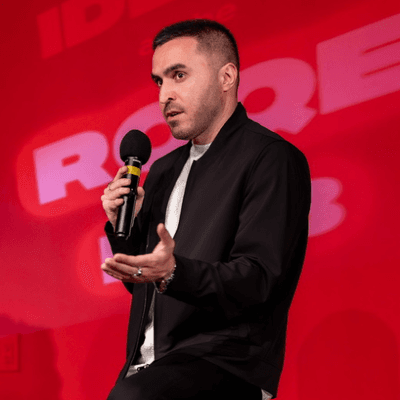
Hamed Azimi
Founder, NexusWave
Hamed Azimi is the founder of NexusWave Technologies, a Vancouver-based AI-native digital agency and product studio.

We write these guides from real client work — GEO, SEO, and builds we've shipped. If a piece raised a question about your own site, we're happy to look at it.
- Straight answers, no retainer required
- We reply in your language — EN · فارسی
- Based in Canada, working worldwide